Facebook Ads Cloaking in 2026: How It Works, Types, and Key Risks
Cloaking in Facebook Ads remains one of the most widely discussed topics among affiliate marketers. It is used for traffic distribution, audience filtering, and managing advertising campaigns in niches where precise segmentation, visitor control, and understanding platform requirements are essential.
What Is Cloaking?
Cloaking is a technology that allows different categories of visitors to see different content on advertising platforms, including search engines and social networks. In the context of Facebook Ads, the purpose of cloaking is to ensure that one group of users sees one version of a page while another group sees a different version.
Cloaking is most commonly discussed in affiliate marketing, where advertisers work with multiple offers, landing pages, and traffic sources. At the same time, it is important to remember that Facebook prohibits hiding the true purpose of a page or misleading the review team.
Facebook Ads Policies
According to Facebook Ads advertising policies:
- misleading reviewers is prohibited;
- showing different content to Facebook and users is not allowed;
- hiding the actual purpose of a page is prohibited;
- promotion methods that violate platform policies are not allowed.
For this reason, any traffic management approach should be evaluated not only for its effectiveness but also for the potential risks it creates for an advertising account.
How Facebook Detects Cloaking
The platform identifies prohibited content categories using internal monitoring systems. Ad creatives, hashtags, landing pages, calls to action, and even technical domain data are subject to review.
There is a common belief that Facebook moderation is now largely automated and handled by bots.
One of the notable developments has been the introduction of secondary reviews of advertising materials. After a campaign has been running for some time, another algorithm may reanalyze the ad, compare the current content with the version that was originally approved, and, if changes are detected, disable an already active campaign.
Types of Cloaking in Facebook Ads
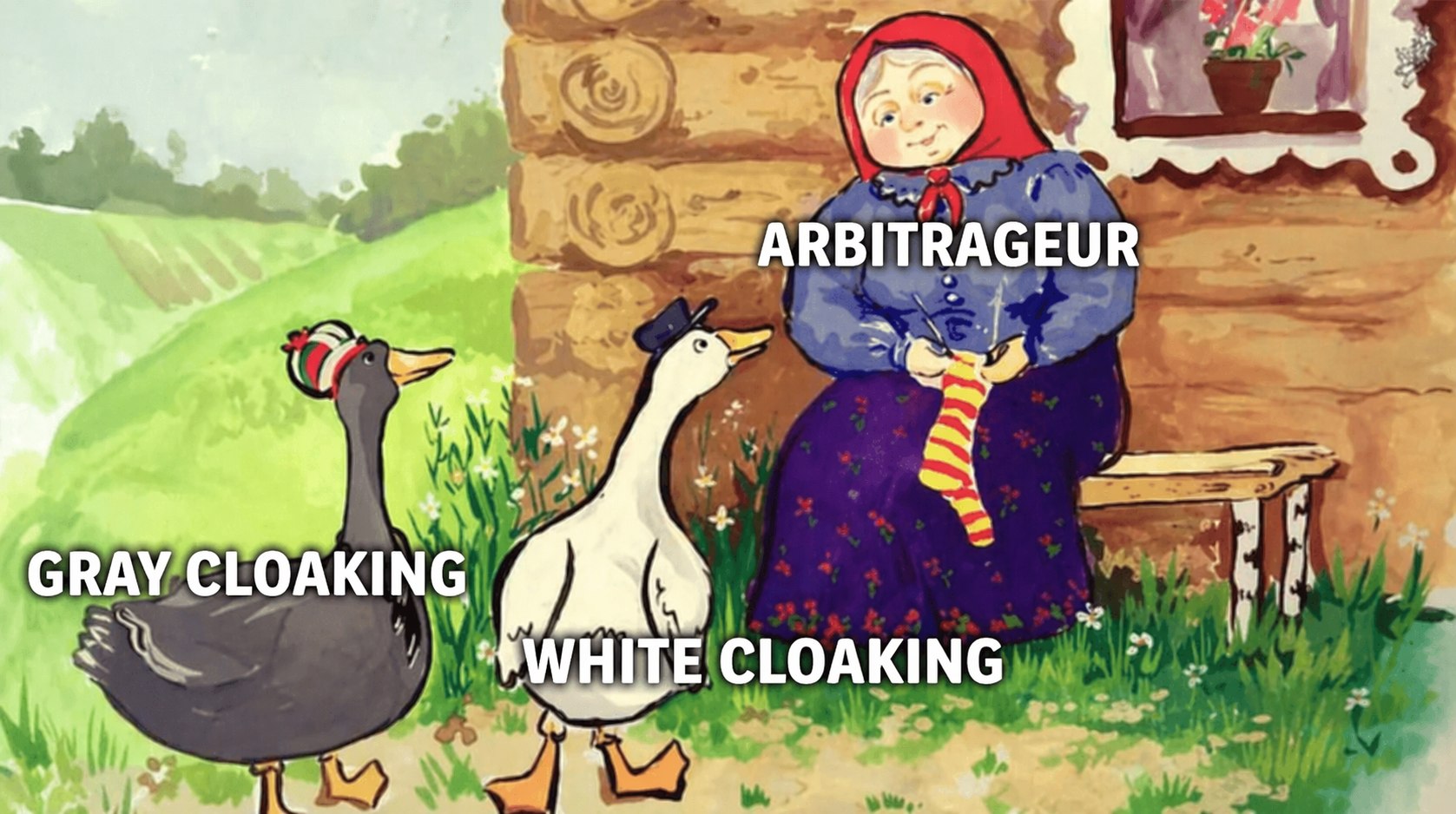
Cloaking is generally divided into two main categories: white hat and gray hat.
White Hat Cloaking
White hat cloaking involves displaying legitimate content while filtering out users who are not part of the target audience. For example, access can be restricted for minors, VPN users, or different versions of a website can be displayed based on a visitor’s country and language.
Examples of white hat cloaking include:
- using shortened links to simplify the user journey;
- restricting access to specific content for minors;
- filtering visitors who use VPN services;
- displaying content in the visitor’s language based on geolocation;
- showing different landing pages to different audience segments without violating platform policies.
White hat cloaking can improve the user experience as long as it complies with Facebook Ads policies and does not mislead the platform.
Gray Hat Cloaking
Gray hat cloaking is a more advanced technical method of content substitution in which different categories of visitors are shown different versions of a page. In affiliate marketing, this approach is most often associated with higher-risk niches such as betting, gambling, supplements, cryptocurrency, and other restricted offers.
Gray hat cloaking is commonly used to promote advertisements that are prohibited under the Facebook Advertising Policies.
Example: a reviewer is shown a “clean” version of a landing page, while a real user is redirected to a page containing a restricted offer.
The primary risk of gray hat cloaking is the suspension of an advertising account, domain, or Business Manager. Even if an ad passes the initial review, a later inspection may uncover policy violations.
What is a cloaker?
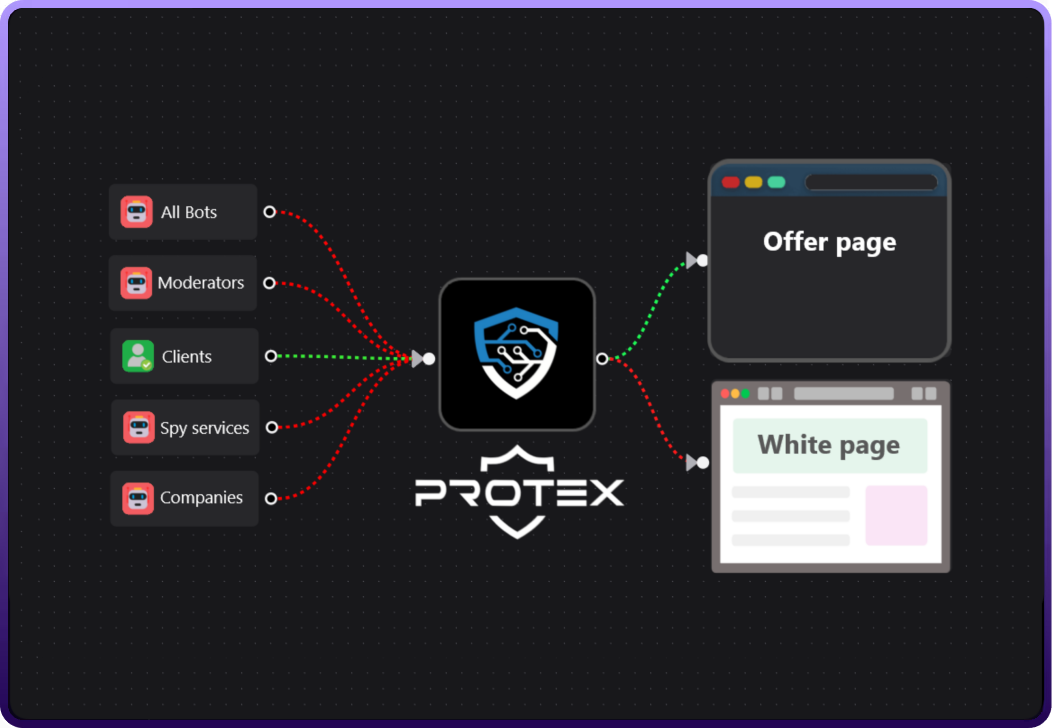
A cloaker is software or a cloud-based service that analyzes incoming traffic and routes visitors to different pages. These systems typically collect statistics on clicks, devices, IP addresses, geolocation, and other parameters.
In affiliate marketing, cloakers are used to filter unwanted traffic, bots, suspicious visitors, and users who do not match the campaign’s target audience.
White Page Requirements
A White Page is the page shown to reviewers or non-target visitors. To appear natural and avoid raising suspicion, it is recommended to follow several best practices.
Key White Page requirements:
- the page should be unique;
- you should not copy third-party websites without permission;
- the topic should be logically related to the advertising campaign;
- terms of use should be provided;
- a privacy policy must be available;
- a cookie notice is recommended;
- the content should look complete rather than like an empty template.
The more professional and authentic a White Page appears, the lower the likelihood of attracting suspicion from both the platform and visitors.
Offer Selection and Analysis
An offer is the product or service to which traffic is directed. To improve campaign performance, offer selection should be approached with careful consideration.
Factors to evaluate:
- how frequently the offer is already being promoted;
- whether there is demand for the product in the target region;
- whether the landing page is easy for users to understand;
- whether the website is optimized for mobile devices;
- whether there is a clear call to action on the page;
- how quickly the landing page loads;
- whether the content aligns with audience expectations.
When the same offers appear too frequently in users’ feeds, engagement often declines, which can negatively impact advertising performance. For this reason, affiliate marketers regularly search for fresher offers, new approaches, and alternative landing pages.
Beyond the offer and landing page itself, payment infrastructure also plays a critical role. Unstable payment processing can distort statistics, cause delivery delays, and attract additional scrutiny from advertising platforms.
In practice, affiliate teams often use separate bank cards for different projects and closely monitor payment activity to reduce potential risks.
How to Choose a Cloaking Service
For reliable advertising operations, a cloaking service should provide more than basic traffic filtering—it should also offer convenient analytics and management tools.
A quality cloaking service should:
- offer flexible settings for accurate audience targeting;
- allow filtering of bots, spy tools, and suspicious traffic;
- provide detailed click and visitor statistics;
- support team collaboration;
- enable user behavior analysis;
- include simple landing page integration;
- allow quick traffic quality assessment;
- provide responsive technical support.
What Is Cloaking Master?
Cloaking Master is a cloud service built to filter unwanted traffic, including bots, suspicious visitors, spy tools, and other non-target clicks.
The platform supports a wide range of traffic sources and leverages machine learning technologies to analyze clicks and detect suspicious behavioral patterns.
How Does the Service Work?
When a visitor lands on a website, the system evaluates multiple parameters, including device type, IP address, geolocation, browser information, user behavior, and other technical characteristics.
After the analysis is completed, the visitor is directed to the appropriate page. The target audience is shown the primary landing page, while unwanted or suspicious users may be redirected elsewhere.
Why Choose Cloaking Master?
- A large collection of unique filtering options
- Advanced fingerprint analysis through PHP and JavaScript fingerprinting technologies
- Detailed real-time analytics and reporting
- Built-in conversion tracking system
- Integrated White Page generator
- Easy integration with PHP, WordPress, and JavaScript projects
- Ability to operate across multiple advertising niches without KYC requirements
- Technical support focused on solving complex operational issues
- Competitive pricing
Cloaking Master offers a 3-day free trial with unrestricted access to all platform features.
Website: https://cloaking-master.com
Conclusion
Cloaking in Facebook Ads is one of the tools frequently discussed within the affiliate marketing industry. Its primary purpose is to segment traffic and display different pages to different categories of visitors.
However, success with Facebook Ads depends on much more than cloaking, White Pages, and landing page quality. The condition of the advertising account, user behavior, payment stability, and the overall project infrastructure are equally important factors.